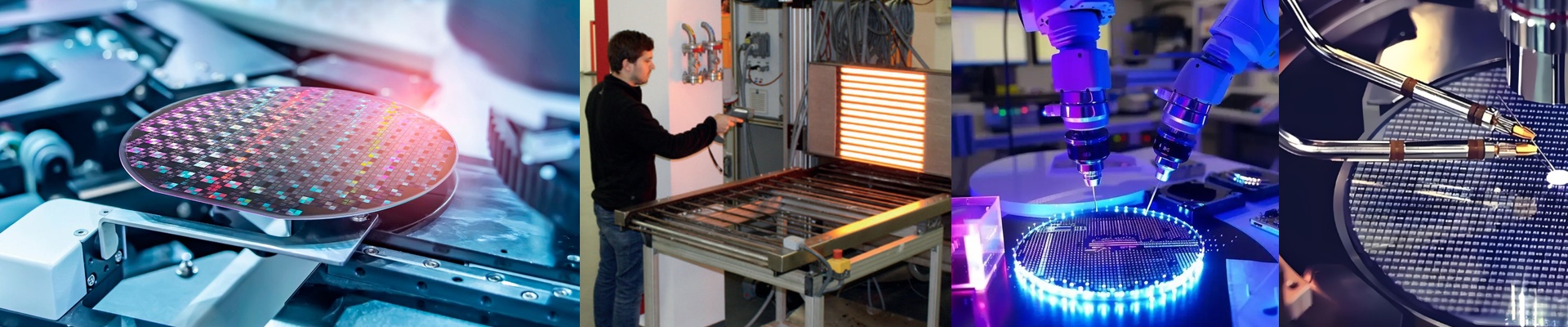

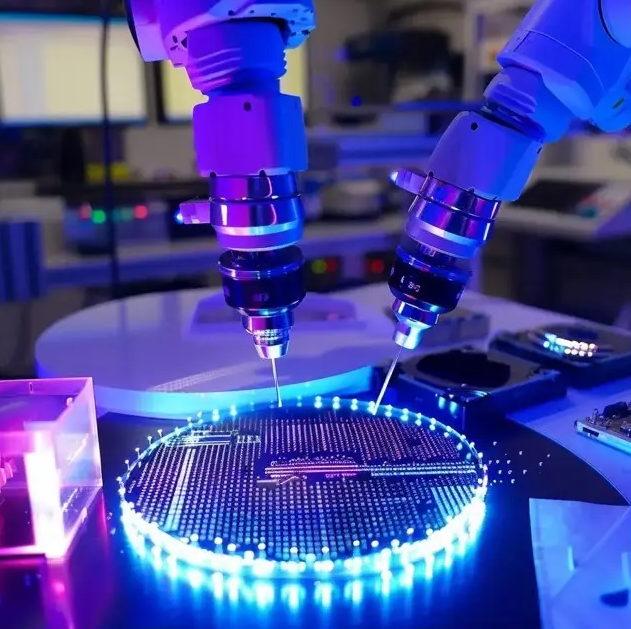
On the fab floor, you live and die by temperature control. In photoresist processing, a tenth of a degree is the difference between a clean run and a lot that gets scrapped. Uneven heat creates hot spots that shift critical dimensions and cold spots that leave footing and scum. The thermal budget drifts across the wafer, and when the bake step isn’t repeatable, your overlay budget shrinks and the rework queue grows. We built the 2026 wafer heater for exactly this reality. It’s a production-grade thermal platform that holds wafer-level uniformity at ±0.1°C, runs with zero particle events, and keeps going 24/7 in Class 1–100 cleanrooms. It was engineered for the hard requirements of soft bake and hard bake, where temperature stability isn’t a metric—it’s the process.
What actually matters
Uniformity is the spec that keeps your process window open. Across a 300 mm wafer, ±0.1°C means the same activation energy site to site, the same outgassing profile, and consistent photoresist flow. The heater hits this by pairing short-wave infrared (NIR) elements with a quartz-based thermal stack and a low-thermal-mass, carbon-fiber-reinforced susceptor. Response is fast, drift is minimal, and the setpoint tracks the recipe without overshoot. Repeatability is the other spec you can’t fake. In lithography, the temperature history has to be the same lot to lot, hour to hour. We hold setpoint repeatability within 0.05°C over 24 hours, and the control loop compensates for line voltage variation, ambient swings, and warm-up transients. The payoff is predictable CD behavior, fewer focus-exposure matrices, and stable line width control. Cleanliness isn’t a slogan; it’s a design constraint. The hot zone uses high-purity quartz and corrosion-resistant fixtures to minimize outgassing. The chamber geometry cuts down recirculation eddies that trap particles, and the heater surface is finished to reduce micro-debris shedding. In practice, that means low particle counts at the wafer surface, fewer defect inspections, and less time chasing yield excursions. Reliability comes down to uptime. The platform is rated for continuous operation, with zero unplanned downtime targets in high-volume lines. Element life is extended through conservative power density and uniform load distribution, and the system provides predictive diagnostics for lamp health and thermal stack integrity. When maintenance is needed, modular components swap out fast without breaking the cleanroom envelope. Energy and thermal efficiency are built in. NIR couples directly into the wafer and susceptor, so you waste less heat on convection and reduce the thermal load on surrounding equipment. That lowers energy draw and makes the hot zone easier to manage, which matters when you’re stacking process modules in a tight footprint.
Why this works where it counts
In the lithography cell, the wafer heater sits dead center in photoresist processing. Soft bake removes solvents and sets film stress; hard bake cures the resist and preps it for etch or implant. If temperature is uneven, the resist profile shifts across the wafer and CD uniformity suffers. With ±0.1°C uniformity, the heater keeps resist chemistry consistent, edge bead control predictable, and post-apply bake stable. In high-volume manufacturing, a process excursion costs more than scrap—it costs capacity. The heater’s repeatability cuts down recipe tweaking and minimizes re-qualification after maintenance. Engineers can lock a thermal profile and trust it day after day. That stability shortens cycle time by reducing rework and qualification steps. Cleanroom compatibility matters because contamination is the quiet yield killer. The heater’s materials and construction are chosen to keep particle generation at zero during operation. Fewer adds on the defect map, fewer lots held for review, and more wafers that ship without extra inspections. Operationally, the system integrates cleanly into existing process tools. Power delivery matches standard voltages, and the mechanical envelope supports common wafer sizes and carrier handling paths. The control interface surfaces the parameters you need—ramp rates, soak times, and stability thresholds—without burying critical settings behind needless complexity.
Practical notes
Thermal performance depends on the environment. You get the stated uniformity when the heater is installed with proper shielding and the process chamber is sealed against drafts and local heat sources. In open benches or unstable HVAC zones, the control loop can compensate, but your margin shrinks. Plan the installation the same way you plan the process: isolate the module, manage airflow, and verify thermal isolation from adjacent equipment. Compatibility is straightforward, but not universal. The platform supports standard wafer formats and integrates with common tool interfaces, though retrofits to legacy equipment may need minor mechanical adaptations. Confirm footprint, connector types, and control bus before scheduling integration. There’s also a trade-off in warm-up behavior. The low-thermal-mass design stabilizes fast, which means the hot zone reaches equilibrium quickly after a lamp change or maintenance. That’s usually an advantage, but if your workflow requires long idle periods at setpoint, you may want to size power delivery and thermal insulation to maintain stability without excessive cycling. If your fab runs on temperature discipline, the 2026 wafer heater is the practical way to keep it. Uniformity, cleanliness, and repeatability aren’t buzzwords here—they’re the conditions that keep photoresist processing in control and yield on plan.