
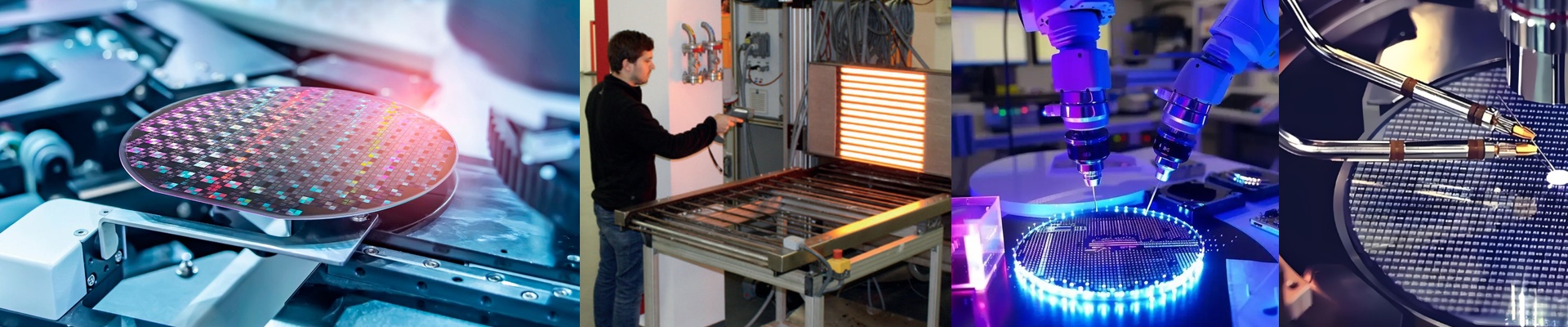


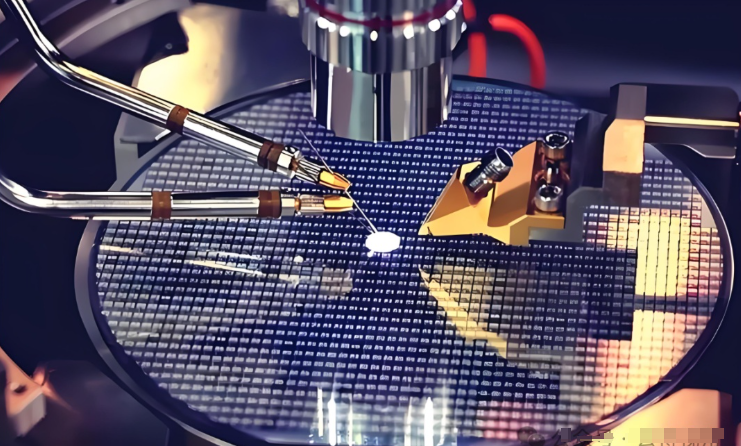
On the fab floor, photoresist processing and post-clean drying don’t leave much room for mistakes. We’re talking nanometer-level tolerances. A bake temperature that drifts, a dry profile that isn’t uniform, or one stray particle introduced during heating — and you can kiss a lot of wafers goodbye. We built the automated wafer drying heater to take those variables off the table. What matters under the hood The unit leans on short-wave infrared (NIR) emitters with closed-loop control. Setpoint stability stays within ±0.1°C across the wafer, and thermal uniformity at the process plane is held to ±0.1°C. That’s what keeps soft bake and hard bake profiles repeatable, lot after lot. The heater body is quartz and high-purity stainless, with low-outgassing parts and a laminar airflow layout. The goal is simple: keep particle generation at zero. It plugs into automated tracks and stand-alone dryers, and RS-485/Modbus handles recipe control and traceability. Why it holds up in production In lithography, photoresist bake temperature is the knob that controls viscosity, thickness, and CD uniformity. In cleaning and drying, controlled heating drops surface tension and prevents pattern collapse — without adding contamination. Cleanroom compatibility through Class 1–100 comes from sealed joints, HEPA-compatible exhaust, and materials chosen to shed minimal particles. The payoff: predictable critical dimensions, fewer reworks, and yield that stays steady. NIR responds fast, so cycle times come down without blowing your thermal budget. Energy use drops, too. What you need to plan for Installation needs cleanroom-rated power and grounding to keep EMI/EMC boundaries intact. Make sure your local voltage and amperage line up with the emitter array configuration you’re running. The heater hits setpoint quickly, but don’t forget thermal soak time in the recipe — especially when you switch thicknesses or resist types. If you’re running solvent-rich resists, confirm your local exhaust capacity can keep concentrations in the safe zone. We provide integration documentation, calibration traceability, and on-site validation to line up with your process control plan.