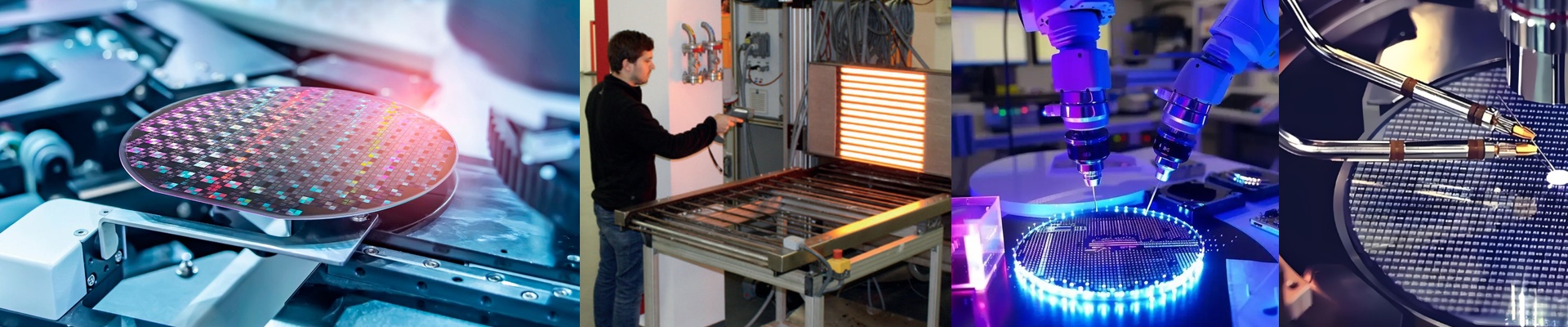
Keeping Things Safe When Heating Wafers Around Volatile Chemicals
Let’s be honest: heating wafers in a chemical cleaning line is a nerve-wracking job. You’ve got flammable, explosive vapors floating around, and your heating equipment is sitting right in the middle of it. Standard infrared lamps just aren’t built for this. One tiny spark or a hot surface hitting a chemical mist, and you’re looking at a total disaster. We’ve spent a lot of time figuring out how to stop that from happening, and it all comes down to how we seal the gear.
The Secret is in the Seal
We don’t just throw a cover over the lamp and call it a day. Instead, we tuck the infrared elements inside high-purity quartz tubes and vacuum-seal them tight. Think of it as a physical wall between the electrical filaments and the air around them. We use these specialized glass-to-metal seals at the contact points so those nasty chemical vapors can’t leak into the housing. And if you’re working with really corrosive agents? We can add chemically resistant coatings to the outer casing so the quartz doesn’t get eaten away over time.
Balancing Heat and Stability
Getting the temperature just right on a wafer is tricky. To make it work, we use short-wave infrared emitters. These dive straight into the wafer surface quickly, which means you aren’t accidentally overheating the rest of your chemical bath. You get a much tighter, more predictable temperature. But there’s a catch. This kind of energy density makes the lamp run hot.**Really hot.**You’ll need to make sure your chassis has plenty of airflow or a solid heat sink. Otherwise, you risk the housing warping under a heavy load.
Making it Work in the Real World
We designed these heaters to be drop-in replacements. You shouldn’t have to rebuild your whole setup to use them. We route the wiring through explosion-proof conduits, which takes the risk of electrical arcing out of the equation. Now, because of the encapsulation, it takes a few seconds longer to hit peak temperature compared to a bare lamp. It’s a trade-off, but it’s one you have to make. Safety isn’t the place to cut corners when you’re dealing with volatile solvents. Just pair it with a calibrated PID controller, and you can keep your thermal cycles locked in within a +/- 1°C window. Simple.