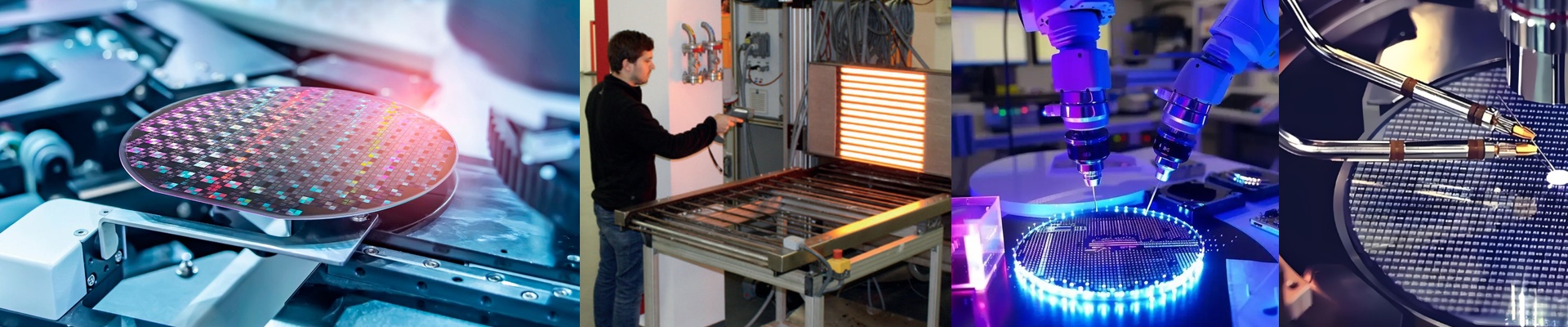
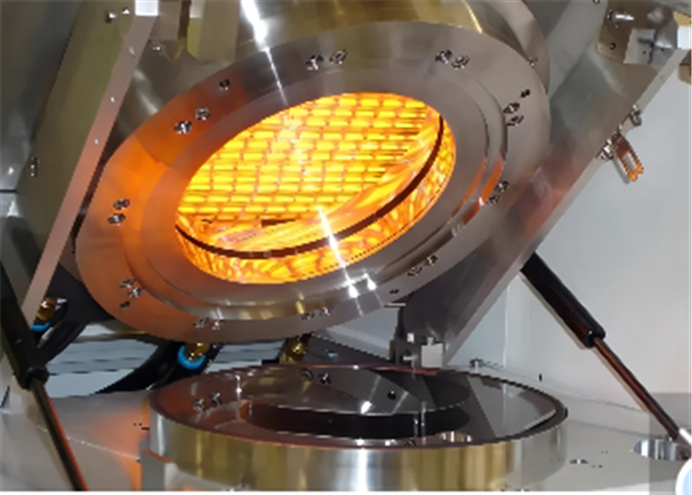
On the line, the 300mm wafer slides into the bake station. The photoresist has to hit the target temperature across the entire surface within seconds. Miss that window, and CD control starts to drift—your yield pays the price. What matters under the hood We built the cleanroom infrared heaters around short-wave NIR sources, because you need direct energy transfer that’s fast, not flashy. Closed-loop feedback keeps the thermal profile locked to ±0.1°C. You get wafer-level uniformity you can read straight out of the data log, not chase in the shift report. The quartz envelope and ceramic body are specced for Class 1–100 cleanrooms: low outgassing, and a build that keeps particle generation at zero. Power density is tuned to the process window, so the ramp, hold, and cool behavior stays clean for both soft bake and hard bake—no overshoot. Why this plays in litho and bake In lithography and wafer processing, the bake step is where you spend thermal budget. With repeatable temperature control, line-to-line and lot-to-lot variation tightens up. That means fewer excursions, less scrap, and CD uniformity that stays stable. The heater snaps to setpoint quickly and holds without oscillating, so energy use drops. And the reliability profile is built for 24/7 fab operation with minimal maintenance stops. What you need to plan before you bolt it in These heaters integrate cleanly into existing bake modules, but you have to match thermal mass and mounting geometry to the chamber. Work the interface early—clearance, alignment, and where you place the temperature sensor all shape closed-loop performance. Spec voltage and connector type to match your equipment, and confirm the cleanroom classification requirements for your specific process.