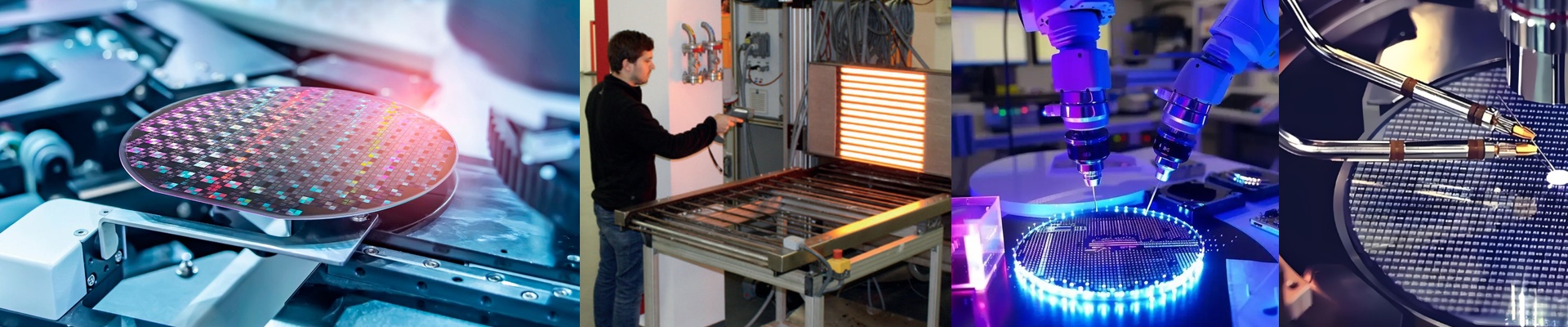
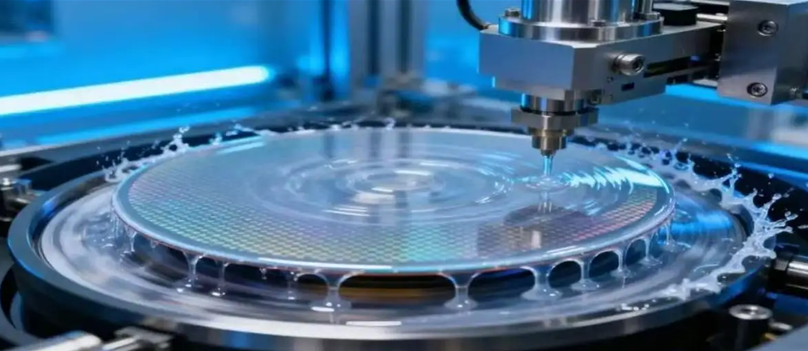
On the fab floor, you learn fast: a 1°C drift during the photoresist bake is enough to move linewidths and turn a 300mm wafer into scrap. Soft bake and hard bake windows are tight—there’s no wiggle room. Thermal uniformity isn’t a nice-to-have; it’s the line between making yield and eating yield. We built our semiconductor infrared heating lamps to keep that thermal budget locked in, shift after shift. What matters under the hood We run short-wave NIR emitters—fast rise, tight spectral control—so we hit temperature quickly and directly, without overshoot. You get wafer-level uniformity within ±0.1°C across the bake zone, and setpoint repeatability of ±0.5°C. Particles stay out because the materials are cleanroom-compatible and the optical path is fully enclosed. The lamps keep going 5,000+ hours with less than 5% output drop. The footprint fits standard tool spaces, and it drops cleanly into existing PLC control. Why this plays in lithography and packaging In lithography, that repeatability shows up as consistent photoresist profiles, fewer rework lots, and CD control that stays put. In packaging, the rapid, even heating shortens cure cycles without stressing the stack-up. And because the lamp heats the target directly, you’re not wasting energy heating the chamber air. The result is stable process windows, predictable maintenance intervals, and fewer unplanned stops. What you need to get right on install Set-up comes down to optical alignment and solid EMI/EMC practice. Stray reflections will find a way to make hot spots, so shielding and baffling are part of the job. The lamp runs in Class 1–100 cleanrooms, but thermal performance depends on chamber geometry and airflow. Give us your tool profile, and we’ll tune the configuration accordingly. Qualification ramps quickly. Once the process is locked, run-to-run repeatability stays where you need it.