Stop Waiting on Your Oven: Why IR Heating Beats Forced Air
If you’ve spent any time in semiconductor processing, you know the frustration of the “wait.” Specifically, that agonizing lag during wafer heating and curing where you’re just… sitting there. In the industry, we call it thermal inertia. In plain English? It’s a massive waste of time.
The problem with hot air
Most of us are used to forced air. It’s the standard. But think about how it actually works: you heat the air, then the air heats the wafer. It’s like trying to warm up a room with a space heater before you’re allowed to touch the thermostat. You spend minutes just waiting for the chamber to stabilize. It’s slow. It’s clunky. IR heating changes the math. It cuts out the middleman entirely. Instead of relying on air, you’re using photons that hit the wafer surface at the speed of light. It happens almost instantly.
What this actually looks like on the floor
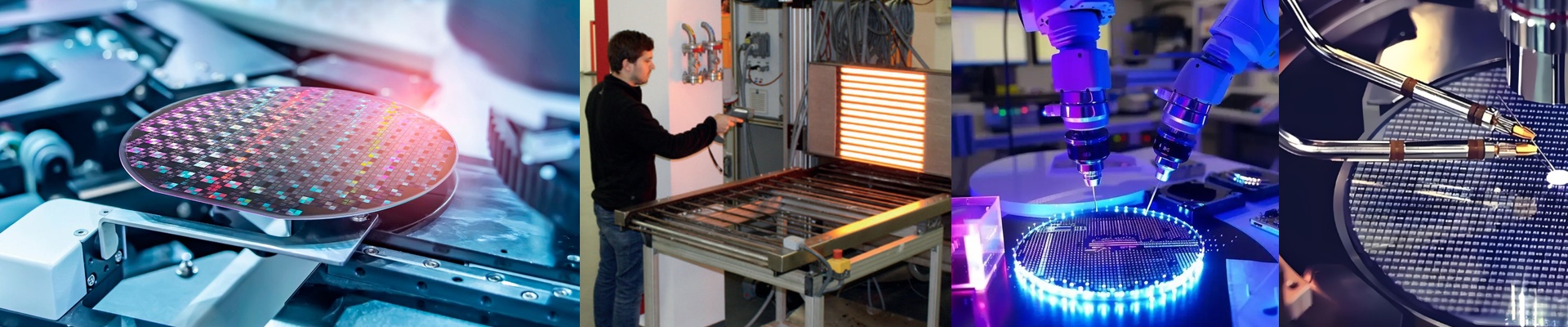
When you move to an IR system, you’re basically buying your time back. Imagine a forced air oven that takes 10 minutes to hit your target temp. Now imagine an IR lamp doing it in seconds. When you multiply that across a whole shift, your throughput jumps. Plus, you get way more control. Since you aren’t blowing hot air around a giant box, you don’t have to deal with those annoying “cold spots” that pop up in big convection chambers. You can just target the specific zones of the wafer that actually need the heat, leaving the rest of the machine alone.
The catch (because there’s always one)
Here is the thing: IR heating is intense. You’re dumping a huge amount of energy into a small space very quickly. If you just slap a lamp into an old setup without thinking about it, your chassis is going to take a beating. You have to be smart about your shielding. If your cooling fans and heat sinks aren’t up to the task, your sensors will start to drift and your temperatures will overshoot. It’s a headache you don’t want. Moving to IR isn’t as simple as swapping a lightbulb. You’re essentially redesigning how your line handles heat spikes. But once you get the cooling right? The speed is worth every bit of the effort.